
What to Eat in Ethiopia? A Guide to Injera and Traditional Food
10 September 2026
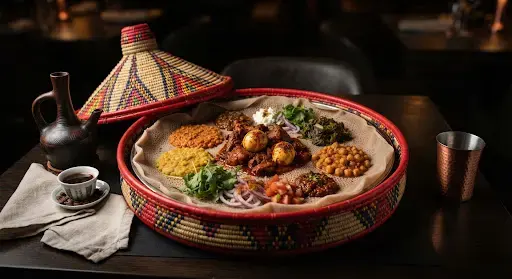
Food is an essential part of traveling through Ethiopia. Ethiopian cuisine combines aromatic spices, meat, vegetables, and legumes, while meals are often served communally, making dining as much a social experience as a culinary one.
The first thing you are likely to encounter is injera.
Injera: The Heart of the Ethiopian Table
Injera is a soft, spongy flatbread traditionally made from teff flour. It is a central part of Ethiopian cuisine and accompanies many traditional meals.
A large piece of injera is usually placed on a shared plate, with different stews, vegetables, lentils, and meat arranged on top.
Instead of using cutlery, diners traditionally tear off a small piece of injera and use it to pick up the food.
Doro Wat
If you enjoy chicken, doro wat is one of the dishes you should try.
It is a rich Ethiopian chicken stew prepared with onions and a blend of spices. It is commonly served with injera and can range from moderately spicy to quite hot depending on the preparation.
Tibs
Tibs is another popular Ethiopian dish, usually consisting of pieces of meat cooked or fried with onions, peppers, and spices.
There are many variations of tibs, so the flavor and preparation can differ considerably between restaurants.
Travelers who prefer grilled meat can also find a variety of grilled options. If halal food is important to you, ask about the meat source and preparation before ordering.
Shiro
For a traditional vegetarian option, try shiro.
Shiro is commonly prepared using chickpea or legume flour combined with onions, garlic, and spices. It is usually served with injera.
Its creamy texture and rich flavor make it a great introduction to Ethiopian vegetarian cuisine.
Vegetarian Food in Ethiopia
Ethiopia is an excellent destination for vegetarian travelers. Lentils, beans, peas, and vegetables feature heavily in traditional cuisine.
Misir wat, a spiced lentil stew, is one popular option, alongside a variety of vegetable dishes.
During Orthodox fasting periods, vegetarian dishes become particularly common in many restaurants.
What About Halal Food?
Halal food is available in Ethiopia, particularly in cities and areas with significant Muslim communities.
If halal certification or preparation is important to you, it is still a good idea to confirm the restaurant's practices and ask about the ingredients and preparation of meat before ordering.
Don't Forget Ethiopian Coffee
No Ethiopian food experience is complete without coffee.
Ethiopia has a deep historical connection with coffee, and the traditional coffee ceremony is an important part of local hospitality. Coffee beans are roasted, ground, and brewed in front of guests.
Take your time and enjoy the experience. In Ethiopia, hospitality is part of the meal itself.
A Simple Tip for Travelers
One of the best ways to explore Ethiopian cuisine is to order several dishes and share them with your travel companions.
Start with injera, add a meat dish and a vegetarian option such as shiro or lentils, and finish with traditional Ethiopian coffee.
The flavors may be unfamiliar at first, but the combination of spices, ingredients, and communal dining is what makes Ethiopian cuisine such a memorable part of the journey.